Light, glare and the hour you shoot
The Stitched Sailor crew · 2026-07-02 · 4 min read
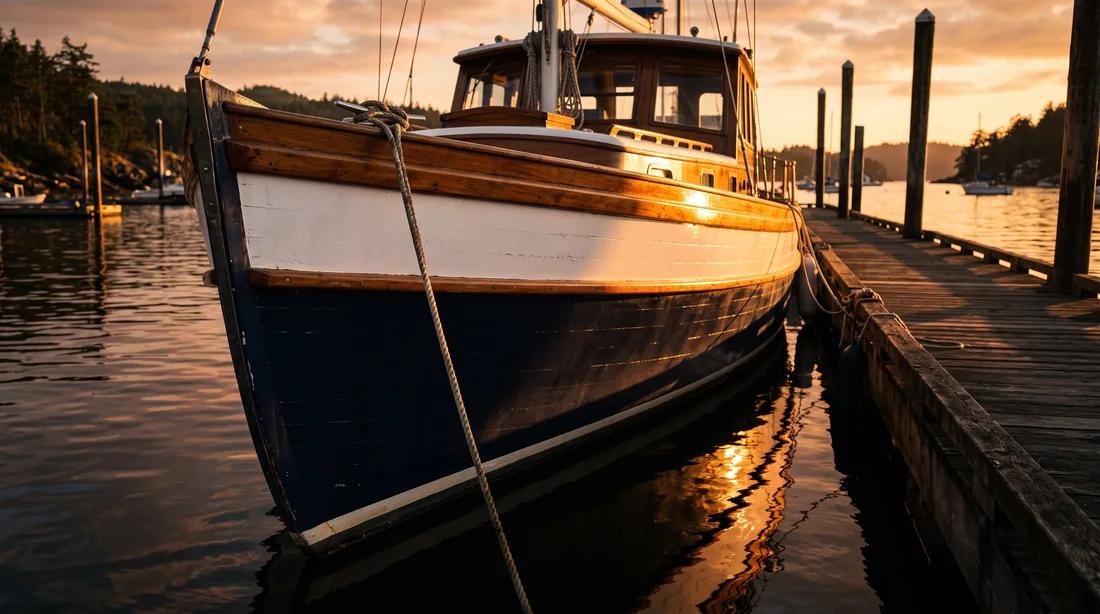
Gelcoat is a mirror. That is the entire problem in one sentence. A boat is a big curved reflective object sitting next to a big reflective surface, and the sun does not have to be badly placed for the topsides to go to a sheet of white with no shape in it.
The hour after sunrise and the hour before sunset are the reliable windows. The sun is low, so it rakes across the hull instead of bouncing off the top of it, and the sheer line picks up a highlight that shows exactly where it runs. Colour reads warmer and truer, and the water behind her goes darker, which separates hull from background without anyone doing anything.
Midday is the hard one. Overhead sun flattens the topsides, throws hard shadows under the gunwale and the tower, and blows out white surfaces completely. If midday is when you are there, put the sun over your shoulder rather than off to the side, then move until the worst of the reflection slides off the panel you care about. Half a dozen steps along the dock can change the whole photograph.
Overcast is underrated. A flat grey sky is an enormous soft light and gives the most accurate hull colour of any condition. It looks unremarkable to the eye and draws beautifully, which surprises people every time. If the day is grey and you were about to wait for better weather, do not.
Wet topsides after a wash or a shower will mirror everything nearby, including you. Give her a few minutes to dry, or shoot from an angle where what she reflects is sky rather than the marina.
None of this needs a real camera. A phone in good light beats an expensive camera in bad light every time, and we would far rather have a well-lit phone photo than a technically better one taken at noon.